Sales
Sales operations guide: definition and role responsibilities
By Seismic On November 27, 2023

Sales
By Seismic On November 27, 2023
Find out how sales ops leads to faster and better selling for go-to-market organizations.
As a sales leader, you're always looking for ways to create efficiencies, drive productivity, and improve performance across your team. But, all of this can't be achieved by yourself. Enter sales operations. In this guide, we'll take a look at what sales operations is, why it's important for every organization, and the key responsibilities needed for success.
As sales organizations become more process driven and strategic, sales operations have taken on a new level of importance. The sales operations role was invented at Xerox in the 1970s and described as a position that “takes care of all the things that no one wants to do, but needs to happen to make a great sales force.”
Fast forward fifty years, and there are now thousands of sales operations professionals in the United States alone. The role only continues to grow, but what does the modern-day role of sales operations look like for today’s go-to-market (GTM) organizations?
Sales operations support the greater sales team so they can successfully drive revenue. The primary goal of sales operations is to streamline and improve sales processes so sellers can be as effective and efficient as possible. This involves:
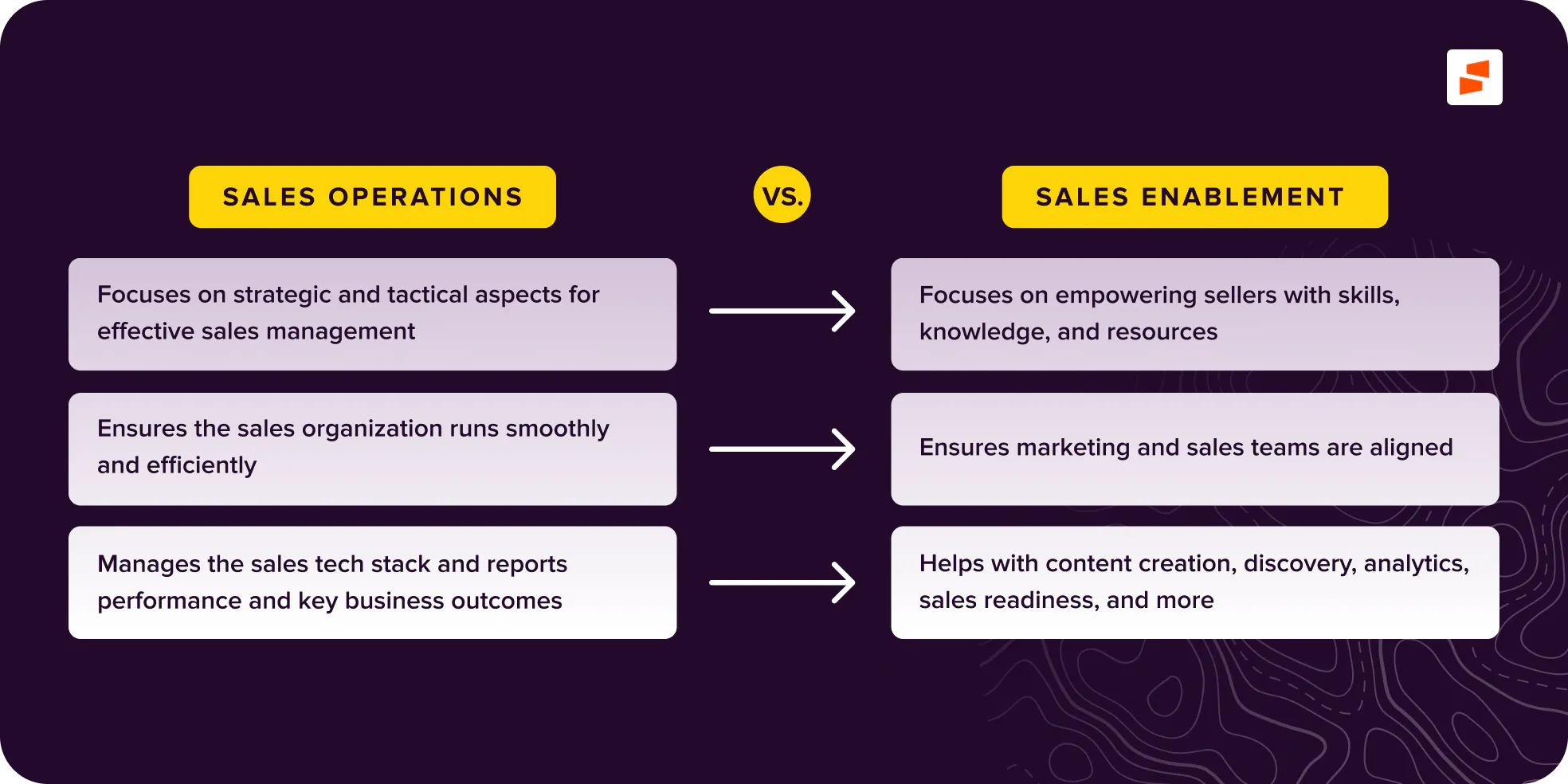
Sales operations and sales enablement are closely related, but serve distinct roles within GTM organizations. And, while they share similar goals, there are key differences. Let’s break them down.
Sales ops focuses on the strategic and tactical aspects needed for effective sales management. The sales operations function is primarily a behind-the-scenes role that implements the necessary tools, resources, and processes sales teams need to hit their goals.
Sales enablement focuses on empowering sellers with the skills, knowledge, and resources they need to succeed. This is a more hands-on role that improves the productivity and performance of sellers by providing training, tools, and enablement resources tailored to specific sales plays and company objectives.
Organizations with strong sales ops experience higher productivity and greater revenue?
The world of sales is quickly evolving, and teams need to make smart investments in order to remain competitive. Many organizations are also trying to do more with less in today’s economic climate. At the same time, buyers have changed the way they interact with sellers. All of these scenarios mean that GTM teams need to make strategic business decisions that will lead to as much success as possible. Sales ops makes this possible by supporting sales leaders and sellers alike with the strategies and tools they need to be effective. In fact, a study by McKinsey found that organizations with a strong sales operations team experience higher productivity and greater revenue than those without one.
Now that you have a better understanding of what exactly sales operations does and why it’s so important, let’s take a closer look at specific responsibilities and tasks.
Sales operations teams work closely with sales leadership to develop sales plans, set goals, and create strategies that enable sellers to hit targets. This includes:
Sales operations also play a key role in recommending the organization and responsibilities of the greater sales team. This includes:
Sellers only have so much time in their day, and Gartner found that they only spend 18% of it selling. Therefore, any amount of time that you can give back to them to focus on core selling activities is going to pay large dividends. Sales operations can have a major impact here by implementing tools and processes that automate manual processes, remove barriers, and streamline processes. This includes:
Sales operations rightly deserves a strategic seat in every GTM organization And while all of these responsibilities probably won’t apply to your team, it’s important to evaluate them and identify the best areas to focus on.
Organizations with strong sales ops experience higher productivity and greater revenue?
Best-in-class companies are eager to jump in and use the best tools and resources to help their organization create a winning sales enablement strategy. Hungry for more knowledge about sales enablement and how it can help your organization operate efficiently? Get a demo and we’ll show you how!